Read following articles for current affairs.
1. Misogyny in the name of religion(Sana saleem)
Not very long ago, singer-turned-cleric, Junaid Jamshed riled up a significant number of religious groups after a video of his diatribe was released online.
It was the usual; Jamshed shaming women for existing, speaking of them as strange creatures who need to be ‘controlled’ but who can never be truly understood.
What was different this time was that he channeled his chauvinism towards the Prophet’s (PBUH) wife. Like clockwork, Jamshed was pushed to release a video taking back his words and apologise, before fleeing the country. He said he didn’t mean to be blasphemous or disrespectful; it is believable, because what became evident was that Jamshed’s chauvinism knows no bounds.
We should know better than anyone else that religion can be a trenchant tool for complete control. Very often, the control begins with establishing a patriarchal culture. Not your usual ‘it’s a man’s world’ patriarchy, but the kind where women aren’t the lesser ones, they simply do not exist.
Consent is all but absent; in fact, having consent at all is seen as a grave threat.
The most recent poster child for this misogyny is Maulana Sherani, of the good old Council of Islamic Ideology. He’s back with yet another statement on marriage, divorce and all things women.
This time, Sherani has stated that not only are men ‘allowed’ to remarry without their wives’ permission but even the idea of a wife consenting to polygamy is anarchism.
This anarchism, according to Sherani, is furthered under the garb of women rights. Because of course, the rights of women do not exist unless they are dictated by men.
The rights that do exist are in reality convoluted ideologies that teach women that being a subordinate is a norm, because they were born this way.
That women were born for a purpose which is to satisfy a man’s sexual desires, be a homemaker and a procreator.
Unfortunately, this kind of class misogyny is not limited to Sherani. He is a reflection of the deeply entrenched myths within our culture.
The kind that completely overlook women’s role in our history, both religious and national, and entirely deny women equality and respect.
On the face of it, you are free; you can get educated and even have a job but all along you must never forget your true purpose; to get married and raise a family.
The obsession with the ‘need to get married’ is exactly what pushes men like Sherani to release statements about how unnecessary it is for a partner to consent — if such willingness even exists — to polygamy.
For Sherani and many others, marriage is a man’s need, to lay it bare ‘sex’ is a man’s need and so he should be allowed to have multiple partners at the same time.
What the likes of Sherani completely overlook is that this isn’t just about an anarchic women rights agenda but that this is about men too.
This kind of mindset degrades men before all else, by minimising them into sex crazed, emotionless masters that need to be satisfied endlessly.
Men, then become the kind of individuals, who can never feel empathy, hold any kind of emotions other than the ones associated with masculinity and can’t under any circumstances, be vulnerable. In fact, their only vulnerability remains their sexual desires.
Sherani’s statement go beyond polygamy, they speak of the invisibility of consent.
This is then extends to everything concerning men and women, rape, domestic violence, birth control, the list is endless.
Unfortunately, for Sherani, our homes and streets are full of anarchic women ready to strike back each time an attempt is made to silence them.
2. Rape the girl, blame the girl (Badar Iqbal Chaudhary)
I have been trying to write on this topic for quite some time now, but unfortunately, I was left shocked and speechless every time I heard another frivolous justification for rape cited by sex offenders.
Mukesh Singh, the convict in the 2012 Delhi rape incident – in which a daughter of India had to suffer the consequences of being born a girl in a patriarchal, chauvinistic society – asserted it was Nirbhaya’s fault, that she was “indecent to be roaming around at nine o’clock at night.”
What can you say to this twisted logic?
What can you do to change it?
No solution, no suggestions, no words ever seemed sufficient. Worse, true justice is unattainable, impossible.
When I first entered the field of law, I had the usual quixotic notions of the profession – how glamorous it would be; how virtuous, how just. I had imagined I would go about pleading justice, and it would fly towards me like winged angels. I saw myself as a solitary force of order amidst chaos.
It would be easy, I thought, or at least convenient.
One of the first files that came my way was that of a rape incident. The victim was a final year medical student at one of the most prestigious universities of the country. The culprit was her Khalu (maternal uncle).
He had trespassed her house with the intention of theft, and was discovered by the girl. She was raped, apparently to silence her from speaking up, and it was filmed. The uncle, soon thereafter, absconded to one of the Southeast Asian countries.
By the time I put the file down, I was fighting back tears. I thought about what she must have envisaged for her future, what she must have dreamt for her life; all those years of hard work, all those moments of struggle she must have gone through, and now, here she was, a rape victim.
In sub-continental societies, a rape victim is a victim twice. She is a perpetual victim. Once invaded by the soulless barbarian, and forever stigmatised to the soulless society.
We have been trying to get the culprit repatriated through Interpol ever since. Years have passed; the poor girl has had to appear in courts over and over ever since, but without any sign of the criminal.
Psychologists hypothesise that rape is about power and not lust. I feel that is an over-simplification of the truth.
Also read: The trivialisation of rape in Pakistan
I remember that sweltering day in June when, just having finished cross-examination and drenched in sweat, a senior colleague and I were walking down the long corridors of the city district courts. An ASI had approached us, requesting for help with a statement that a rape victim was to make in the court. She did not have a lawyer.
We quickly examined the file’s contents and walked into the court. The perpetrator, the Mamu (maternal uncle) of the girl, was already standing there in shackles. The statement was made – a shocking story of betrayal and inhumanity.
Then, the defendant spoke.
He stated that whatever he would say would be the entire truth. He told the court he had fornicated with his niece only after marrying her. He alleged that the 16-year-old had asked him to save her from the clutches of her parents, who were getting her married against her will.
In the convoluted logic of his sick mind, the request for being saved from the parents meant forcefully marrying the girl and raping her thereafter. This was his ‘defence’.
That was the first time I had lost my composure in court.
Also read: A license to rape
It was perhaps the only time I felt the urges that those imposing vigilante justice feel. I was too shaken to work after that – I came back home and spent the rest of the day brooding.
We get cases of murders on a daily basis – two, four, six, more dead – enmity, sectarianism, flaying tempers or something else. These incidents shake me up, but none half as much as the rape and the acid attack cases.
Death is painful, but living a traumatised life that which kills you a little every day is far worse. I cannot fathom the pain of it. I have the imagination, I lack the courage and the strength to envision it.
Freud had enunciated that as a consequence of cognitive self-defence, humans validate their acts by rationalising them as being right. According to Dale Carnegie, Al-Capone – the most notorious gangster of 1920s America – thought of himself as more of a Robin Hood than a Moriarty.
Mukesh Singh rationalised his rape like this: “A decent girl won’t roam around at nine o’clock at night. A girl is far more responsible for rape than a boy.”
9pm was the boundary for Mukesh. A girl out on the road after a given time was asking to be raped. No other consideration required.
I wish it were as absurd as saying a car out on the road is asking to be stolen, or a man out on the road is asking to be shot, but appropriating this logic for the rape analogy is much more nefarious.
For others, it may be the dress code, or the girl’s conduct. It could be her attitude, or something she said. It could be her silence, or her mere existence. Everything is indicative of how she was asking for it; it was her fault; she deserved nothing better.
Also read: Policing Mathira, Deepika — and all South Asian women
I want to believe it is ignorance that causes such acts, I want to be convinced it is Bollywood that perpetuates this culture.
But when well-read people like Munawar Hassan, the former JI chief, who have no business with Bollywood, defend the accused by stating a girl who cannot corroborate her story with four witnesses should not report rape, the above postulates become untenable.
Also read: Clicking on rape
It is the patriarchy (in both India and Pakistan), and the tendency to think of a woman as chattel, even whilst claiming they assume a respectable position in our midst. Sadly, with this hypocrisy firmly in place, we will continue to ask the same questions to the same horror:
What can you say to this twisted logic?
What can you do to change it?
3.
Five ways Pakistan degraded women
Pakistani women know to expect no special concessions. At any given moment in history, one or another political force, religious edict, or social problem is aiming directly at them, pointing fingers, attaching blame. Given this, most of them expected few good things to come out of the commemoration of International Women’s Day.
Sure, there would be some laudatory articles commemorating them, a few celebrations and gatherings here and there, providing neat opportunities for politicians and dignitaries to do their smiling and clapping bit, hand out checks to widows, listen to schoolgirls sing. A history of dealing with misogyny has meant a reality of low expectations. No one, of course expected anything to actually change for the better.
A lack of hope, however, does not equal adequate preparation for catastrophe. If things were bad on women’s day, a pragmatic Pakistani woman may have assumed, they would stay in their existing state of awfulness for at least the next week. As it turns out, they were wrong.
The week after women’s day has proven that new depths of misogyny are indeed possible and that they will be achieved in Pakistan, a country resolute in being the most woman hating place on the planet. Here a list of five steps the country took in this direction.
1. Recommended child marriage
On March 11th 2014, two days after the celebration of International Women’s Day in the country, Pakistan’s Council of Islamic Ideology (perhaps fearing that women had become empowered by the occasion), decided to deliver some decisive blows.
The Chairmen of the CII, Maulana Mohammad Sheerani, declared that children below the age of puberty could be married off and that international conventions prohibiting child marriage were un-Islamic and not applicable to Pakistan. In one statement therefore, Pakistani girls, even babies were left vulnerable to abuse, with their lives and futures now liable to being decided long before they could have any say in the matter.
Also read: CII: Pushing Pakistan back to the caves
This was not the limit to rage against women, on an earlier day, he had also declared that any law requiring a Pakistani male to obtain permission from his first wife for a subsequent marriage, were also un-Islamic.
2. Ignored a rape victim until she burnt herself alive
She was 18 years old and she was a survivor of rape in a country where rape victims can themselves be prosecuted. Over two months earlier, on January 5, 2014, she had lodged an FIR at the police station alleging that the accused Nadir Khan, along with four accomplices had raped her near Bait Mir Hazar Chowk.
On March 13, 2014, all five men were set free. On March 14, 2014, five days after International Women’s Day, she set herself on fire outside the police station, which had so callously denied her justice. She died of her burns on the same day.
3. Buried a woman alive
Sughra Brohi of village Hakim Khan Marri in Sanghar District had committed the crime of marrying a man of her own choice. The village panchayat met and the elders assured everyone that she would not be killed if she returned home. They lied, As soon as she returned home, she was assaulted by her own family.
According to the Sindhi language daily, Kawish, she was buried alive in the graveyard of the Bheel community in the area. The grave was discovered and the news reported this last week. Area police are said to be investigating the case.
4. Beat up striking nurses
More than a hundred female nurses had been on strike for over five days outside the Punjab Assembly building. The nurses were protesting the firing of their colleagues who had been working on ad hoc or contract basis. On Friday March 14, 2014, the nurses all of whom were unarmed were baton charged by police.
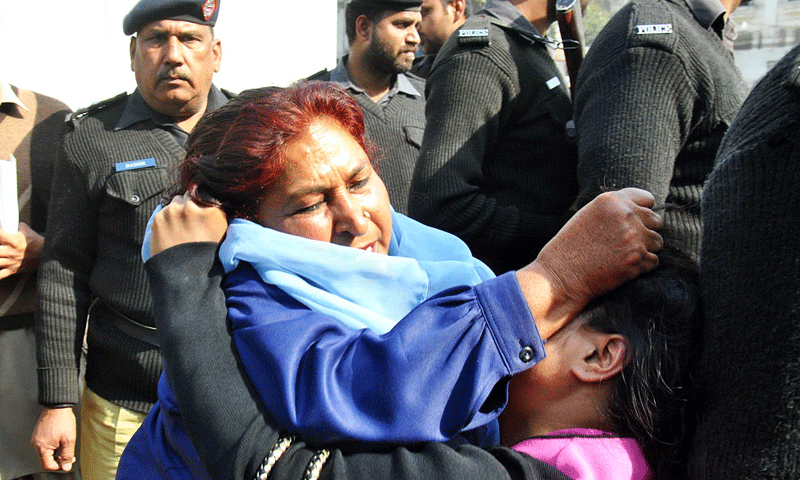
News footage of the incident showed the women being charged and heavily assaulted by law enforcement. Several were injured and had to be hospitalised, and two were so critically hurt that they had to be admitted to the intensive care unit of an area hospital.
Despite, the use of undue and unjustified force by the police, those that were unhurt continued to mark their ongoing protest outside the Assembly building.
5. Called them good for cooking not for cricket
If the round-up of being buried alive, burned to death, raped and baton charged were not plentiful degradation for Pakistani women to bear in a single week, a public insult by a man crowned the country’s cricket hero, added one more degradation to the week’s dastardly mix.
Also read: Why I won’t be cheering for Shahid Afridi anymore
In an interview question, Shahid Afridi was asked about what he thought about the under 19 women’s cricket trials recently held in Karachi. The cricketer now revealed himself to be a male chauvinist; implying that “our women” were better kept in the kitchen, assumedly cooking up meals for their men.
With this list, the week ended, a series of blows, not unusual, not unique, but notable in their ability to represent, what is an entire nation’s inability to respect one half of its population.
Also read: Bigotry in the name of God
In the dead and injured and degraded collected in this one week, is the reflection of a country in which every man considers himself unaccountable and unconnected to the miseries enacted every day and day after day on women.
The forces of law, of faith, of community, of Government and of entertainment, each one came together in this bouquet of misery and degradation, its stench and filth, exposing the rot that lies within.
4. ‘Utterly disastrous cut-and-run’: What the US media has to say about Biden’s withdrawal from Afghanistan
Long before the official withdrawal date of the United States from Afghanistan, August 31, the Taliban sit in the presidential palace in Kabul following their rapid advances in rest of the country, effectively now in control after being ousted by US forces in 2001.
Conservative media as well as left-leaning critics in the US have taken aim at the abruptness of the US withdrawal announced by President Joe Biden and what they call poor execution of the end to a 20-year war which cost the country $2 trillion and nearly 2,500 US lives.
Republican rivals predictably attacked Biden but he also faced the most critical coverage of his presidency, with television networks juxtaposing images of Afghanistan’s collapse with his remarks a little more than a month ago that “the Taliban overrunning everything and owning the whole country is highly unlikely”.https://www.instagram.com/tv/CSoKV9hof3n/?utm_source=ig_embed&ig_rid=69bdfd91-5fa5-4260-a7e5-a3d49d0eb27d
Here, Dawn.com has rounded up some of the articles published in US media regarding Biden, Afghanistan and what this ‘debacle’ could mean for his legacy.
Opinion: Disaster in Afghanistan will follow us home
The New York Times
“Biden’s heedlessness, on the cusp of a sweeping Taliban blitzkrieg that on Sunday saw them enter Kabul, will define his administration’s first great fiasco. It won’t matter that he is carrying through on the shambolic withdrawal agreement negotiated last year by the Trump administration, with the eager support of Trump’s isolationist base, and through the diplomatic efforts of Trump’s lickspittle secretary of state, Mike Pompeo.
This is happening on Biden’s watch, at Biden’s insistence, against the advice of his senior military advisers and with Biden’s firm assurance to the American people that what has just come to pass wouldn’t come to pass. Past presidents might have had a senior adviser resign in the wake of such a debacle, as Les Aspin, then the secretary of defense, did after the 1993 Black Hawk Down episode in Somalia.
This time, Biden owns the moment. He also owns the consequences. We should begin to anticipate them now.”
Opinion: Twenty years of Afghanistan mistakes, but this preventable disaster is on Biden
Washington Post
“The words that Biden uses to describe the delta variant — a ‘largely preventable tragedy that will get worse before it gets better’ — apply to his handling of Afghanistan. Former defense secretary Robert Gates once said that Biden ‘has been wrong on nearly every major foreign policy and national security issue over the past four decades’. He has certainly been calamitously, tragically, wrong about Afghanistan.
Biden cannot claim ignorance of what was to come. He was amply warned by the US intelligence community. I am no seer (and goodness knows, like Biden, I have been wrong about plenty), but immediately upon hearing of Biden’s withdrawal plan I wrote a column whose headline was: “Biden’s Afghanistan withdrawal could be the first step to a Taliban takeover.”
The only thing I did not anticipate — no one did — was how rapidly the unraveling would occur. Even last Monday, the US military was warning that it would be 30 to 90 days before Kabul fell. Now, six days later, it has fallen, and Biden will spend the rest of his presidency grappling with the tragic consequences of this preventable disaster.”
Analysis: Biden’s botched Afghan exit is a disaster at home and abroad long in the making
CNN
“Biden now finds himself carrying the political can for two decades of the missteps of others — after adding his own errors. He will be accused of rushing the US exit to create a favorable political narrative as the President who got US troops home before the 20th anniversary of the September 11 attacks in 2001 — plotted by al Qaeda from Afghanistan — and ahead of next year’s midterm congressional elections.
At the same time, Biden was doing exactly what most Americans, exhausted by long years of foreign quagmires and confused as to why US troops were still in Afghanistan 20 years after 9/11, wanted. There was no national support for escalating the war. To check the Taliban advance, the President would have had to deploy thousands more US troops and to wage new combat without public support. That and his own long-term skepticism about the war left his own withdrawal decision almost inevitable. But the strength of the Taliban advance caught the White House flat footed.
Try as Secretary of State Antony Blinken did on Sunday talk shows, there is no way to spin events of the last few days as anything but a domestic political, and geopolitical, wreck.”
Opinion: Biden’s Afghan withdrawal achieved nothing but disaster
Bloomberg
“A poorly planned, deadline-driven withdrawal — which was rapidly leaving Afghan forces without the close air support that could rescue them in extremis, the contractors that kept their air force flying, the logistical support that kept their units supplied, and the psychological backstop of having America behind them — denied the government a reasonable chance to adjust.
There’s also a larger point that advocates of withdrawal are missing: What has happened in the last few weeks shows just how valuable the US deployment in Afghanistan was. At a regrettable but, from a strategic perspective, manageable cost in money and US lives — fewer than 25 deaths per year since 2015, and steadily declining over time — that deployment was the critical factor preventing a long, grinding conflict from turning into the nightmare that is unfolding today. Given the price of removing US troops from Afghanistan, perhaps keeping them there would have been a relative bargain.”
Editorial: This Afghan rout is entirely on Joe Biden
New York Post
“The White House can pretend that diplomacy might somehow save the Afghan government, but its real sentiments rest in President Biden’s words while campaigning last year, when he said he’d have ‘zero responsibility’ for what happened after he pulled US troops out.
We didn’t disagree with Biden’s move to remove the last US ground forces, just as Donald Trump promised as well when he was in office. That’s plainly what most Americans wanted, too. Afghanistan had become an endless war.
But any pullout had to have a plan. Not an utterly disastrous cut-and-run, with virtually no provision for the Afghans who worked with us all these years.”
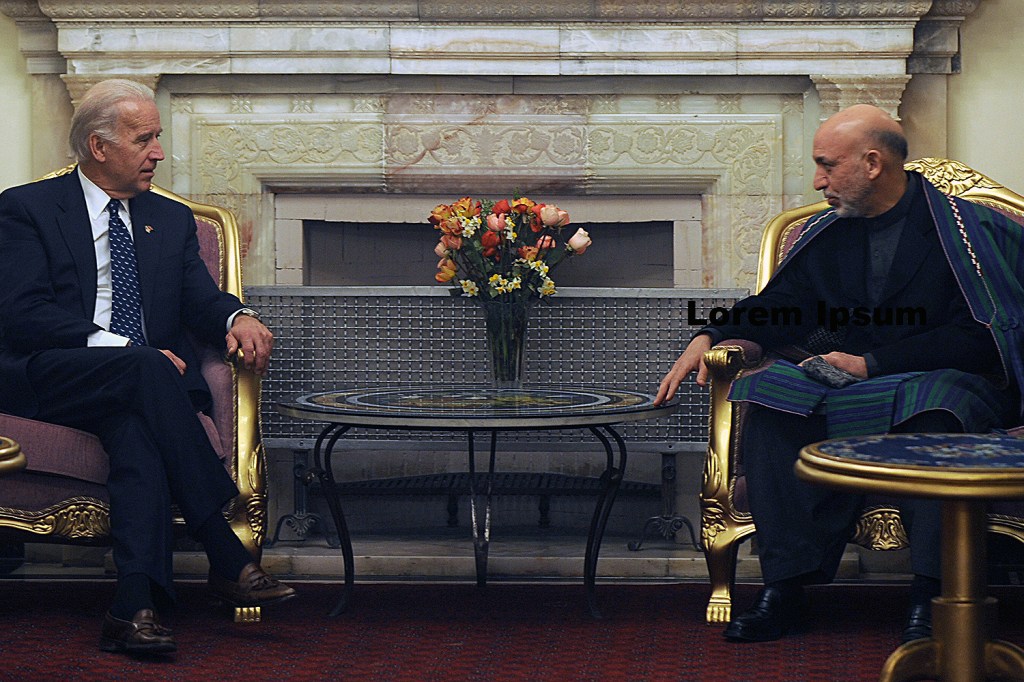
Analysis: How America failed in Afghanistan
The New Yorker
“The pathway of the collapse was predicted and predictable. This has happened in Afghan political and military history a couple of times before. But there was a speed and momentum of people recalculating where their interests lay, and switching sides, and capitulating without violence that I don’t think the Biden Administration had expected when it announced its timetable in the spring.
The counter-argument to the Biden Administration’s policy is not going to be forever war and the defeat of the Taliban; it is going to be a critique of the haste with which it pulled the plug on what was not a large deployment, and one that was not incurring a lot of casualties.”
Opinion: Afghan lives ruined or lost will be part of Biden’s legacy
Washington Post
“Mr Biden surveys the impending disaster and absolves himself of any responsibility. It’s up to Afghan leaders, he said Tuesday, to come together. ‘They’ve got to fight for themselves, fight for their nation.’
The truth is they had been fighting, but the United States trained them to do it with support from US advisers and contractors. Suddenly this support is gone. The Biden administration says it will take care of people who worked directly for the United States and face the most danger of Taliban violence and reprisal. This is the right thing to do. In a real sense, though, this country assumed at least partial responsibility for all Afghans. Leaving them now means walking away from that responsibility. Afghan lives ruined or lost will belong to Mr Biden’s legacy just as surely as any US dollars and lives his decision may save.”
Opinion: Biden could have stopped the Taliban. He chose not to.
The New York Times
“Both the US and Afghan governments are now scrambling to mitigate the effects of Mr Biden’s specific decisions. Amid the chaos, there is an important lesson to be learned: Whether announced by tweet or speech, decisions made without concrete plans or robust implementation strategies are wrong — regardless of which president or party spearheads them.
Afghans are paying the price of Mr Biden’s decision today as the Taliban seizes cities, assassinates officials and begins reimposing its oppressive ideology on a people who have long fought to be free of it.
The United States will likely also continue to pay for its actions in Afghanistan. There’s a real danger that militant groups will reconstitute themselves and once again pose a significant threat to the American homeland. With America’s allies left in the lurch, prospective partners will think twice before offering up their support in future conflicts.
They know that this is not how a global leader acts. And most important, so do we.”
Opinion: The debacle in Afghanistan
The Wall Street Journal
“Many Afghan troops are fighting bravely, but they lack the air support that has been their main military advantage. Mr Biden blundered in withdrawing all US air power from the country, including private contractors who assist the Afghan air force in maintaining helicopters and planes. The contractors are now literally having to assist via Zoom calls, while the US military flies too few sorties from the Persian Gulf region to slow the Taliban.
The White House has failed to understand what’s happening, with leaks saying the Administration is surprised by the Taliban assault. Surprised? The military warned Mr Biden and so did US intelligence. The Taliban began this offensive on May 1, two weeks after Mr Biden announced his withdrawal, aiming for the symbolic date of Sept. 11.”
Opinion: Withdrawing from Afghanistan makes sense, but Biden’s execution is a disaster
USA Today
“As a combat veteran, President Biden’s disastrous withdrawal of troops from Afghanistan alarms me.
Withdrawing our troops from Afghanistan is not wrong – it’s long overdue. In 2014, after 13 years, we ended our combat mission. It should have ended years earlier, after we defeated the Taliban elements that harbored those responsible for 9/11.
After years of arrogant nation-building efforts, President Trump’s 2020 ceasefire agreement with the Taliban finally set the right course. We’ve lost thousands of American lives and spent nearly $200 billion helping the Afghan government build an army to defend their country against the Taliban. Now is the time for the Afghan army to do just that.”
Opinion: Biden’s stain: US flees Kabul
Axios
“It’s a stunning failure for the West, and embarrassment for Biden. And it’s a traumatic turn for US veterans who sacrificed in Afghanistan over the past 20 years, the 20,000+ wounded in action, and survivors of the more than 2,300 US military personnel who were killed.
Richard Fontaine, head of the Center for a New American Security and former foreign policy adviser to Senator John McCain, told Axios: ‘It’s striking that, with 20 years to think it over, the United States withdrew its forces without a plan for the aftermath.’
Analysis: As the Taliban gains ground in Afghanistan, this is Biden’s cold-eyed judgment of American interests
CNN
“History doesn’t always repeat itself. Those who warn a Taliban return will eventually threaten the US could be drawing the wrong lessons. Terror groups that seek to attack the US could base themselves in any number of failed states. And can the President justify committing more lives to a failure that seeds blame through four presidential administrations? US and allied forces won the Afghan war in weeks in 2001 — then spent the next 19 years losing the peace.
‘These things happened, they were glorious and they changed the world,’ Wilson is quoted as saying at the end of the Hanks movie Charlie Wilson’s War, in a reference to the Soviet defeat that seems prophetic today. ‘Then we f**ked up the endgame.'”
Analysis: Biden administration scrambled as its orderly withdrawal from Afghanistan unraveled
Washington Post
“The urgency bordering on panic laid bare how the president’s strategy for ending the 20-year US military effort — leaving Afghan forces to hold off the Taliban for months as negotiators redoubled efforts to hammer out a peace deal — has undergone a rapid dismantling.
The lightning collapse is rooted in misplaced assumptions — including a failure to account for how the US departure would catalyze a crisis of confidence in Afghan leaders and security forces, enabling the Taliban blitz — from the moment Biden announced the withdrawal this spring. It is equally the product of two decades of miscalculations about transforming Afghanistan and overly optimistic assessments of progress that have plagued the war from its start.”
Editorial: A rescue plan for Afghanistan
The Wall Street Journal
“What an awful, tragic irony. President Biden in April chose Sept. 11 as the deadline for US troops to withdraw from Afghanistan. Now it’s possible that, on the 20th anniversary of the 9/11 attacks, the Taliban that once protected Osama bin Laden and that the US ousted from power could again rule in Kabul.
Mr Biden would like to absolve himself of responsibility for this looming defeat, but he cannot. He could have withdrawn US forces in a careful way based on conditions and a plan to shore up Afghan forces or midwife an alliance between regional tribal warlords and the government in Kabul. The President did none of that.
Instead his mid-April decision to withdraw, on the eve of the summer fighting season, triggered the May 1 start of the Taliban offensive. The rapid withdrawal timetable meant US forces would be preoccupied with that task rather than assisting Afghan forces. His decision to abandon multiple military bases, and withdraw all air power, has denied the Afghan army crucial support it relied on.”
Analysis: Taliban sweep in Afghanistan follows years of US miscalculations
The New York Times
“To critics of the decision, the president underestimated the importance of even a modest presence, and the execution of the withdrawal made the problem far worse.
“We set them up for failure,” said David H. Petraeus, the retired general who commanded the international forces in Afghanistan from 2010 until he was appointed CIA director the next year. Mr Biden’s team, he argued, ‘did not recognize the risk incurred by the swift withdrawal’ of intelligence and reconnaissance drones and close air support, as well as the withdrawal of thousands of contractors who kept the Afghan air force flying — all in the middle of a particularly intense fighting season.
The result was that Afghan forces on the ground would “fight for a few days, and then realize there are no reinforcements” on the way, he said. The ‘psychological impact was devastating’.”
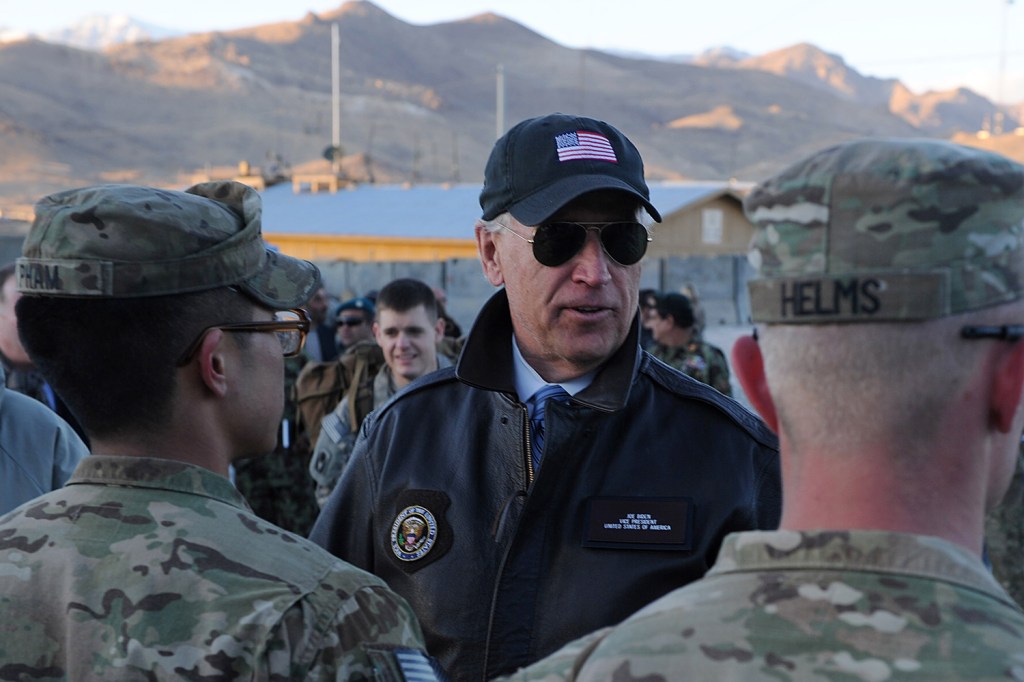
The header image shows then-US vice president Joe Biden meeting US troops in Afghanistan’s Maidan Wardak province on January 11, 2011. — Reuters
5.
Very angry men
PAKISTANI women have seen everything in these arduous, long and bloody weeks. Women have been killed by husbands, killed by their in-laws, killed for existing, killed for refusing to do the bidding of some feral and entitled man.
The living have had their own share of tribulations: maimed and harassed, made subject to the fury of mobs in real life, made subject to the fury of mobs online. Existing anywhere where there are men, and that is everywhere in Pakistan, has been laden with risk for women. Some angry man somewhere is always waiting to pounce, to harm and to hurt. Even dead women are not spared, forced to die second and third and fourth deaths at the hands of men who are convinced that it is never ever their fault.
Sometimes, online, women are able to find a small corner that has not yet been invaded by men. In one such conversation, young women gathered to speak about the ferocity of the recent spate of violence. All were astounded at the particular quality of recent attacks on women. Women have been butchered, mentally and physically and emotionally, for a terribly long time in Pakistan. Yet it is also true that the recent episodes of killing after killing — the public manhandling of a female social media personality, the beheading of a beautiful young girl — all have an anger, a vile and pestilent quality that is not the norm. This is not death and suffering handed out, it is death and suffering handed out with relish, with a certain joy and elation that is utterly grotesque.
All men do not kill or abuse, but a large number of them can be seen supporting those who attack and abuse women. They pour into chatrooms and clubhouse sessions, on Instagram and on Twitter, ready to ‘kill’ the victims twice and three times. They point out the many ways in which it is the woman’s fault, the clothes, the actions, the failure to foresee the crimes that await them. Their message seems to be the same in every case: if you make a mistake, try to question the rules men have made, then you deserve to ‘die’ many times over.
The government needs to take special notice of the current avalanche of violence against women.
It seems that men have the right to be what they are, who they are. Many of them roam the parks, the streets or, sit on sofas inside homes, teaching courses. It is their world and women can exist only at their whim and fancy and only if they acquiesce to grovel before their male masters.
Men in this country, then, appear to be in the grip of the same misogynist fever that has taken over the rest of the world.
The Delhi rapists were angry at a certain kind of woman, a woman who dared to enjoy herself in a public space, a woman who was not appropriately apologetic, a woman who dared to be present without being sorry. Their anger was of the same source as, say, the anger of white supremacists in the United States who worry that every immigrant, every non-white person, is present for their replacement.
The possibility that white privilege may not grant them that to which they have been accustomed, that the world may not be structured around this village, is a prospect of doom, an end to all things that are good. Those who are not white and have had to inhabit a white world know what this is.
Read: The roots of misogyny
Male privilege has the same logic of hatred. The idea is that women are lesser humans, deserving at best the scraps and rubbish that men have decided they no longer want. The nature of male privilege is such that not only does it wield power, it also is convinced that those subjugated enjoy the rotten morsels that have been tossed to them. Men, including in this country, not only force women to live limited lives, they imagine that they love those lives and would want nothing better. Women are expected to become the tame birds that do not fly away even when the door to the cage is opened. Many become those birds; they sing all day about the happiness they have found in their cages, they wonder why other birds refuse to be content in the constrained spaces allotted to them.
Male anger of this moment is at those birds, the ones looking for the spaces, the pauses, the possibilities through which they could be free. When the Delhi rapists found such a woman, they made her into an example. The maintenance of male privilege requires that those who encroach on it must be dealt with swiftly and deftly. So the beautiful girl is beheaded, the wife has her head smashed in, the social media star is grabbed and assaulted. These are all lessons that are meant to intimidate the women who are left behind, who may have considered the possibility of freedom of a world that is not so completely defined by male privilege.
In Pakistan, the government needs to take special notice of the current avalanche of violence. The misogynistic and mediaeval Afghan Taliban, who quite insistently wish to banish women altogether, have set themselves up next door. Pakistani men must not be permitted to nurse the delusion that they, too, can soon establish a similar system that misuses faith to banish women from public spaces and monitor their every move everywhere else so that they know that they are lesser humans. It is a fearful moment, this, and if the government cares about women at all, it would do well to announce that the climate of fear is not some first step before women are shut away because of concerns about their own safety.
6. Press and Taliban(Huma Yusuf)
LAST week, a family member of an Afghan journalist who worked for a German broadcaster was killed by the Taliban. They went from house to house searching for the journalist, who was already in Germany, and instead murdered a relative in a stark warning for other media personnel. This is one of innumerable terrifying tales to have emerged from Afghanistan in recent weeks. But the unravelling of Afghanistan’s press is an especially distressing development.
In their first press conference, the Taliban insisted the media could function, as long as it followed some ‘suggestions’: adherence with Islamic values, impartiality, and upholding the national interest. The world has since watched with amazement as private news channels have continued to broadcast, with female journalists still on air, albeit with tempered content.
Preserving Afghanistan’s press would be a major sign that Taliban 2.0 is taking a different tack. It is one of the country’s greatest success stories. From having no independent media under the previous Taliban regime, the country has gone on to boast more than 170 radio stations, over 100 newspapers and dozens of television channels.
But developments suggest that Afghanistan’s press, for many years the freest in South Asia, will be among the Taliban’s first victims. According to Nai, a media advocacy group, at least 30 media workers have been killed, wounded or tortured since the start of the year, and that’s before the Taliban took control. Fifty-one media outlets have also closed over the past four months.
Afghan media may be among the Taliban’s first victims.
Afghan journalists are going into hiding, quitting the profession, erasing their online profiles, fleeing the country — or trying to. Their situation has been deteriorating since the Taliban began making territorial gains earlier this year. A UN report in February indicated that attacks and threats against journalists were becoming more targeted. According to Human Rights Watch, the Taliban track reporters online, leaving chilling warnings on Facebook feeds or via text message, or detain them overnight. Threats are peppered with details about a journalist’s movements, family members and work.
Female journalists are particularly threatened, despite Taliban avowals that women can continue to have a role in public life. Women say they have received death threats, or have gone into hiding after hearing of the Taliban searching for them door to door. They take the threats seriously, after a series of assassinations of female journalists over the past year (including some claimed by IS).
Irrespective of the pacifying statements in last week’s presser, the Taliban’s view of journalists is clear. The Taliban spokesman in May warned that journalists would ‘face the consequences’ for one-sided reporting or collusion with intel agencies. The group has long painted journalists as Western agents, spies, and sell-outs, thereby justifying violence against them.
In regions where the Taliban have seized control, they have suspended or closed media outlets. Over 1,200 journalists have lost their jobs due to closures, or after being replaced by Taliban supporters. Media outlets that reopen typically broadcast Taliban propaganda.
Read: Afghan journalists at risk
This situation is untenable for the journalists, the country and region. Reliable information will be of critical importance in the Afghan context in the coming months. The Afghan people and international watchers need to know how the Taliban are operating in villages and towns, what services they’re offering, how they’re enforcing law and order, and whether there’s evidence of brutality. Accurate updates will shape the Afghan public’s response to the new regime, and the world’s approach to any Taliban-led administration.
Over the past two decades, Afghanistan’s media emerged as a barometer of public opinion, serving as a conduit between people and their government. Popular call-in radio shows created a discursive culture. If Afghans cannot voice their grievances through this medium, they may turn to more aggressive means.
Regional countries benefit as well from Afghanistan’s press. Pakistan, in particular, needs a thriving media landscape in Afghanistan. Knowing the scale and nature of the brewing humanitarian crisis, for example, would enable Islamabad to better plan for the flow of refugees. Accurate information about the security environment will be key for assuring Pakistan’s own security.
This should have been a key area where Pakistan could influence the Taliban for the better. Sadly, our own track record on media freedom makes it difficult to make a compelling argument. Indeed, the Taliban may be imitating our censors in their use of terms such as ‘religious values’ and ‘national security’ to keep journalists guessing, and increasingly self-censoring. In an ironic twist, could our strategic need for a free, independent media in Afghanistan inspire us to improve our own position on press freedom?
7. What can be expected under a Taliban government? How is the international community responding to this extraordinary turn of events? And what does it mean for Pakistan? Most consequential for Pakistan is whether the situation stabilises and peace is established in Afghanistan?
The situation in Afghanistan is in flux so any assessment is necessarily tentative. But first, the much-debated question as to why a 20-year Western project ended in chaos and a political and military collapse. Varying answers have been offered. A key explanation lies in the fact that no dispensation imposed by foreign military intervention outlasts the departure of its patron. This has long been a lesson of history. A 21st-century version of a colonial-style ‘civilising’ mission lay in ruins as the final act of a project plagued by strategic flaws and tactical misjudgements from the very start. What was imposed on Afghanistan by the US-led coalition was a war of retribution — for 9/11 — and not one defined by consistent or realistic objectives.
The meltdown of Afghan national security forces represented a collapse of political will — a reminder that more than military training and sophisticated weaponry it is the motivation to fight that counts. An imposed government deeply mired in corruption hardly provided a reason to fight for demoralised and abandoned soldiers. Pakistan’s former army chief Gen Ashfaq Parvez Kayani had presciently warned US officials over a decade ago that the Afghan army would eventually collapse. Not to be underestimated was the popular yearning for peace which may also explain the lack of armed resistance to the Taliban as that would have involved more bloodshed.
Most consequential for Pakistan is whether the situation stabilises and peace is established in Afghanistan.
What next for Afghanistan under the Taliban? Again, a much-discussed question is whether their rule will be a throwback to their austere and repressive reign of the 1990s or a break from that dark past. Answers will only emerge with time. For now, the Taliban are keen to dispel the impression that the future will resemble the past, in recognition of the reality that the international environment today is very different from two decades ago.
In the first press conference after their takeover of Kabul, Taliban spokesmen claimed they would behave differently, having learnt from experience. Pledging no retributory action against those who fought them they also sent a number of messages about how they intend to govern. They vowed to establish an inclusive government, respect human rights and women’s rights and ensure Afghanistan’s soil will not be used against any country.
This was aimed to reassure an anxious and sceptical international community. Whether the Taliban live up to these promises remains open to question especially as there are already some indications of relapse into their old ways. Nevertheless, talks between the Taliban and former political foes are in progress to set up a broad-based government. It is to be seen if a political settlement emerges. Many countries are in a wait-and-watch mode and suspending judgement for now. Clearly though, concerted pressure by the global community seems to be working. The Taliban are making reassuring statements in their desire for international legitimacy and recognition. The country’s fragile economic situation must weigh significantly in their calculation especially as dollar reserves are dwindling while the IMF has suspended funding. Without international assistance and trade the economy would simply collapse.
The international consensus — as also reflected in the Aug 16 UN Security Council statement with the focus on an inclusive government, respect for human rights and combating terrorism — has sent a common message. It has encouraged the Taliban to adopt a conciliatory stance, in words at least. This means two things. One, engagement is having a moderating effect and two, consensus over key expectations is eliciting assurances from the Taliban. The converse may also hold true. If the international community divides over the recognition issue or there are cracks on other issues this could provide wriggle room to the Taliban to back out of promises. Thus, the need for the multilateral community to engage the Taliban, hold out diplomatic inducements but also sustain collective pressure to ensure promises translate into actions.
Read: Afghanistan’s future
To make good on their promises the Taliban will have to ensure that local commanders abide by their leaders’ decisions. Moreover, mollifying the international community is one thing and living up to public expectations is another. Governing a war-ravaged country will be the real test and an imposing challenge especially as the Taliban have been a warring force, not one adept at governing. Consolidation of power will depend on how well the country is administered, accommodating others as well as addressing the needs of a new generation who are more educated and connected to the outside world.
Islamabad has long argued that other than Afghanistan, Pakistan has the most to gain from peace in its neighbouring country and the most to lose from more strife and instability. There is understandable relief among officials that bloodshed has been avoided so far. But as the situation is yet to settle Pakistan must move with caution and prudence. In this fluid period Islamabad must stay in lockstep with the international community and coordinate closely on the issue of formal recognition. There is no advantage in going it alone. Diplomatic engagement is in any case continuing and so is cross-border trade. Islamabad is also extending help in intra-Afghan talks aimed at a political settlement. But its involvement should not go beyond this in line with its stated policy that it should be an Afghan-owned and Afghan-led process. Our security forces should also step up border surveillance as a fluid situation can encourage cross-border attacks from militant groups based in Afghanistan that Kabul has yet to act against and on which Islamabad should secure ironclad guarantees.
Above all, the government should speak less on an evolving situation and with one voice. There is no reason to sound triumphal, be spokespersons for the Taliban or to keep obsessing about the past. It is the future that should concern us and what is most consequential for the country — whether peace will return to Afghanistan after decades of war, strife and foreign interventions.
8. Ironies of a war of revenge(zahid hussain)
AMONG the many ironies of the US war in Afghanistan was the instance when Hamid Karzai in December 2001 came very close to an agreement that provided for the Afghan Taliban to surrender and would have allowed Mullah Omar to “live in dignity”. Karzai, who was launched in Afghanistan by the CIA, was operating clandestinely in Kandahar and had just been nominated as interim president.
A deal with the Taliban leadership would have ended the war much quicker and could possibly even have brought reconcilable elements of the Taliban into the new power arrangement. But that never happened. As the negotiations reached the final stages, the US intervened and stopped Karzai from making any deal with the Taliban leadership. The Bush administration rejected any negotiated end of the situation. That led to America fighting its longest war.
In an ironical twist of fate 20 years later, the Taliban are engaged in negotiations with Karzai from a position of power after triumphantly returning to Kabul. The Islamic movement is now seeking the former president’s support for the new rule. More interestingly, the main negotiator from the Taliban side is Anas Haqqani, one of the leaders of the notorious Haqqani network, the most feared of the insurgent factions, which is still on the US list of terrorist groups.
The younger brother of Sirajuddin Haqqani, the deputy chief of the Taliban, he spent several years in a death cell before being released two years ago when Americans were desperately seeking an exit from the ‘forever war’. He was a member of the Taliban team negotiating with the Afghan government in Doha. That also saw the rise on the Taliban leadership ladder of the 26-year-old scion of the late Jalaluddin Haqqani.
The war was already lost when the US sat across the table with the same insurgents it had sought to annihilate.
A former mujahideen commander, Jalaluddin Haqqani had strong ties with the CIA and ISI during the anti-Soviet war in the 1980s. President Ronald Reagan had declared him a ‘freedom fighter’. Just before the invasion of Afghanistan, he was appointed commander-in-chief of the Taliban forces. Its links with Al Qaeda, and its influence on both sides of the Durand Line made the network the most formidable militant force. Given the influence of the Haqqanis in the region, the US wanted to weave the group out of both Al Qaeda and the Taliban. Jalaluddin rejected the US offer to cooperate.
But the CIA continued its efforts to prise the group away from the Taliban. In late 2002, US soldiers arrested Ibrahim Haqqani, a brother of Jalaluddin, in eastern Afghanistan on a tip-off by rival tribesmen, pre-empting the CIA’s efforts to establish contact with the Haqqani network.
There was some indication at the time that the Haqqanis had shown some willingness to negotiate with Afghan president Hamid Karzai’s new coalition government in 2002. However, the capture of a key member of the group ended the possibility of any reconciliation with the Haqqani group that would haunt the US forces for the next two decades. The group turned into its most fierce opponent.
Sirajuddin Haqqani effectively took over the command of the network as his father was sidelined because of prolonged illness. The younger Haqqani earned a reputation of being the fiercest insurgent commander. His radical worldview was shaped by his personal ties with Al Qaeda and international jihadist groups, in contrast to the other members of the Taliban leadership council who did not share Al Qaeda’s global agenda.
The Haqqanis turned North Waziristan into their base that became a major cause of tension between Washington and Islamabad. Former US top military commander Admiral Mullen once described the Haqqani network as the “veritable arm of the ISI”. The network was blamed for some of the most lethal attacks in Kabul targeting foreign missions. The Americans put a $10 million bounty on Sirajuddin’s head. In 2018, the network was put on the terrorist list.
But in yet another twist of fate, Sirajuddin, who was then appointed deputy emir of the Taliban, played an important role in the peace talks with the United States in Doha. Just before the February 2020 Doha agreement that paved the exit of the American forces from Afghanistan The New York Times published an op-ed piece by Sirajuddin.
Read: Who are the Haqqanis, Afghanistan’s most feared insurgents?
Enlisted by the United States as one of the most wanted terrorists, the Taliban deputy chief appeared extremely rational in that well-crafted write-up in America’s most respected newspaper. He said all the right things that they wanted to hear. He seemed to favour giving women full rights including the right to work and access to education. He also wanted the US to contribute to Afghanistan’s reconstruction.
Still under a UN travel sanction Sirajuddin may not have surfaced in Kabul as yet, but the high profile of the Haqqani network in the new dispensation cannot be missed. Besides Anas, his uncle Khalilur Rehman Haqqani has also been very active in the negotiations with other Afghan leaders.
Successive US administrations rejected any negotiated political settlement with the insurgents and believed that the war could be won militarily until a few years ago when Washington engaged in structured peace talks with the Taliban leadership in Doha.
It was the time when America was at its weakest, losing control of large swaths of Afghanistan. The war was already lost when the US sat across the negotiating table with the same insurgent leaders who it had sought to annihilate. Some of the Taliban delegates were former inmates of the infamous Guantanamo prison.
The 2020 Doha agreement was described as a document of surrender by many observers. It was obvious that America was in a hurry to exit a war that it could never have won despite its military might. The American exit from Afghanistan has probably been more chaotic than its leaving Vietnam.
One wonders whether the war, which was driven by revenge, could have taken any other course. Yet the conflict has left Afghanistan in a far greater mess. The human cost of the war has been massive. But this is how imperial wars are fought. Zalmay Khalilzad’s remark after the signing of the Doha agreement is very profound: “We must remember the lessons of history, and the darkness of conflict.”
Afghanistan’s future
PM Imran welcomes release of 2 hostages by Taliban in Afghanistan
Taliban free three Indian engineers in exchange of release of 11 insurgents
Afghanistan to release three senior Taliban prisoners: Ghani
Who are the Haqqanis, Afghanistan’s most feared insurgents?
9. Haqqani Network
Who are they?
Where are they now?
Why are they linked to Pakistan?
Why are they linked to Pakistan?
What does the US want Pakistan to do? Who are the Haqqanis, Afghanistan’s most feared insurgents? The Haqqani dilemma
10.
Bitter after-taste
Defeat the ideology
Where the camel sits
Talibanisation of Afghanistan — challenges ahead(Dr-syed Akhter Ali Shah)
US interventions in different countries are well remembered more for their failures than successes
Learning from history and own experience
Military notes — Afghan liberation by Taliban
Afghanistan: what next?
AFTER THE RAID
OBL’s 2011 killing
After the Osama Bin Laden raid
The fall and rise of the Taliban
Where is the Taliban’s supreme leader?
Where is the Taliban’s supreme leader?
Najmuddin A. ShaikhAfghanistan: what next?
Abbas NasirA tall ask of the Taliban
Zehra WaheedEnergy transition
Arif HasanBurden of history
Idrees KhawajaNadra vs ECP
A.G. NooraniAmerican hubris
Pervez HoodbhoyA reformed Taliban?
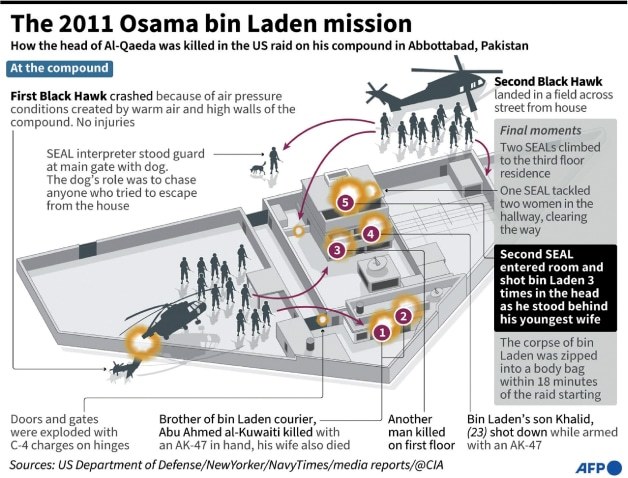
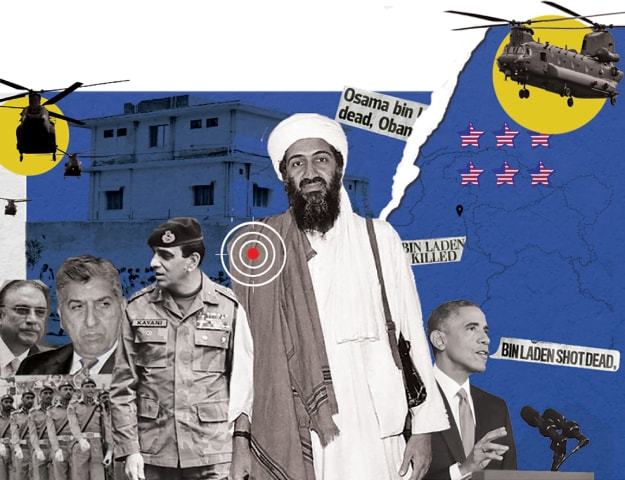
After the Raid …..OSAMA BIN ALADIN
Wage administration
‘Saving’ mission
Jawed NaqviThe press conference and after
No justice, no peace(ARIF NOOR)
Neda Mulji Study skills
Usama KhiljiConsolidating censorship
Taliban and the recognition challenge(Azhar Azam)
FM Qureshi’s refusal to call Osama bin Laden a terrorist is perplexing and defies logic
10 years after his death, Bin Laden’s memory lives on in Abbottabad
Friends not masters: are we there yet?
Aggression, occupation, terrorism — in that order
Taliban and world’s guilty pragmatism
Inam Ul Haque
Taliban should erect a coherent state
Ishtiaq Ali Mehkri
Talat Masood
The chronicle of US failure in Afghanistan and Iraq(
Durdana Najam)
Fish, farm, forest (Aasim Sajjad Akhtar)
1: Serving society(Zubeida Mustafa) 2: Who lost America?(Touqir Hussain) 3: Songs of deficits past(Khurram Husain) 4: Grinning infamy(F.S. Aijazuddin) 5: The new Afghanistan(Najmuddin A. Shaikh) 6:Dire straits 7:The Taliban challenge 8:Coronavirus and conflict 9:Land record online 10:For a free media 11:Not in school 12:EVM controversy 13: More replacements 14: Fort gate collapse 15: Energy options
 Ajman khan wazir